
Key Takeaways
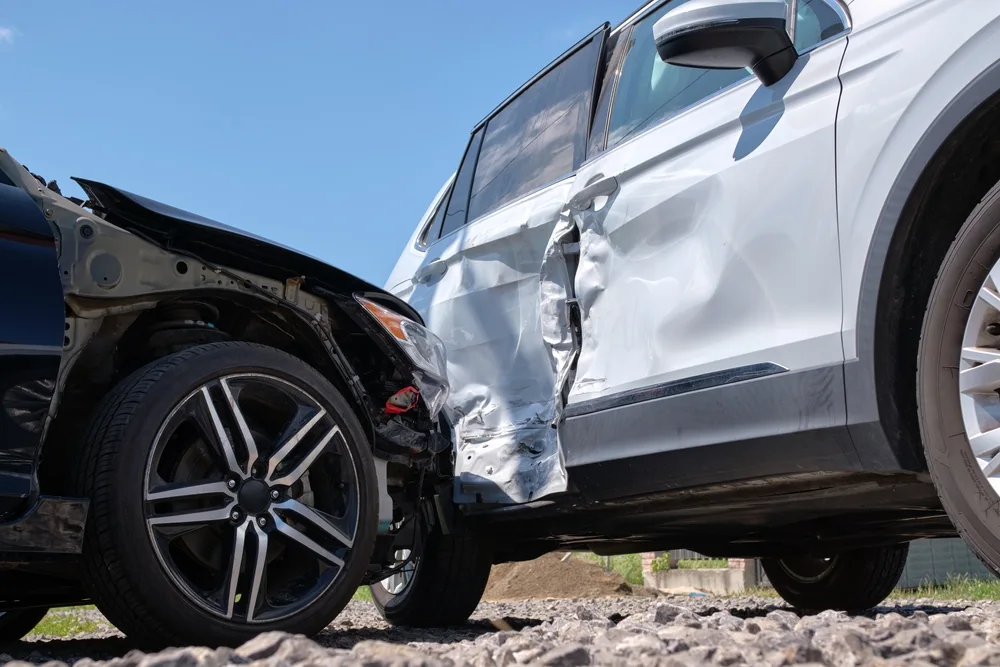
- A T-bone accident happens when one vehicle strikes the side of another, often at an intersection.
- Angle collisions cause more traffic deaths than any other two-vehicle crash type.
- Fault often traces to a driver who ran a light, missed a stop sign, or misjudged a turn.
- In Texas, an injured driver cannot recover compensation if found more than 50 percent at fault.
- Below that point, compensation is still reduced by the injured driver’s own share of the blame.
- Insurance adjusters often dispute liability quickly, so documenting the scene early protects the claim.
A T-bone accident can happen in the time it takes to glance away from an intersection, and the impact often lands directly on the driver or passenger closest to the point of contact. At Reed & Terry Law Firm, our car accident lawyers represent injured drivers throughout Sugar Land and the greater Fort Bend County area, and one of the first questions our clients ask us is who’s at fault in a T-bone accident. It’s a fair question, and the honest answer is: it depends. Texas has a specific way of dividing blame when two drivers both made mistakes, and understanding it starts with understanding just how dangerous these crashes really are.
Speak With a Car Accident Lawyer Today
Why T-Bone Crashes Cause Some of the Worst Injuries on Texas Roads
Here’s the thing about a T-bone crash that makes it different from a typical fender bender. In a rear-end collision, the front and back bumpers absorb much of the force. In a T-bone crash, the full weight of one vehicle slams directly into the side panel of another, and there’s simply very little structure between the striking vehicle and the people sitting on that side of the car. That’s why these crashes tend to produce injuries well beyond bumps and bruises.
According to National Safety Council data, angle collisions, the category that includes most T-bone crashes, made up close to a third of all crashes between two motor vehicles in 2024, about 3,040,000 total. They also caused more deaths that year than any other two-vehicle crash type, about 8,400. Crashes between motor vehicles overall cause less than half of all traffic deaths nationwide, at 43 percent, but they account for the vast majority of injuries: 79 percent of all injuries, 74 percent of injury crashes, and 71 percent of all crash incidents. That’s not just a statistic. It’s what we see again and again in Sugar Land and across Fort Bend County: a side-impact wreck that looked survivable at the scene turns into a serious, long-term medical case once the full extent of the trauma becomes clear.
A crash serious enough to cause that kind of harm is also serious enough to bring the insurance company in fast, and their first move is usually figuring out who to blame.
Common Causes of T-Bone Accidents at Texas Intersections
So how do these crashes actually happen? Most T-bone accidents in Texas happen at intersections, and the mistakes behind them tend to repeat themselves across Sugar Land, Katy, Richmond, and the rest of Fort Bend County. Common causes include:
- A driver misjudging a yellow light and accelerating through just as cross traffic gets a green
- A driver rolling through a stop sign without coming to a full stop, assuming the road is already clear
- A left-turning driver misreading a gap in oncoming traffic and turning directly into the path of a car with the right of way
- Distracted driving, such as checking a phone or reaching for something in the passenger seat, that causes a driver to miss a light or fail to notice cross traffic already committed to the intersection
- Poor visibility at unmarked or poorly signed intersections, particularly in newer residential developments
None of this is obvious from two dented cars sitting in an intersection. Sorting out who’s at fault in a T-bone accident takes real investigative work, not guesswork, which is exactly where the evidence starts to matter.
Get Your Free Case Review
No Upfront Fees (888) 576-4669How Fault Is Determined After a Texas T-Bone Collision
So how does fault actually get decided? It really comes down to two questions: which driver made the mistake, and did that mistake actually cause the collision? Those are answered with evidence, not assumptions. That’s why the police report, traffic signal timing, skid marks, vehicle damage patterns, and any available witness statements or intersection camera footage all matter so much.
Fault typically follows the type of intersection where the crash happened:
- At a signaled intersection, the driver who ran the red light typically bears primary responsibility.
- At a four-way stop, fault often comes down to who arrived first, or who never actually stopped before easing back into traffic.
- In left-turn crashes, a driver turning left generally must yield to oncoming traffic unless a protected arrow says otherwise.
Here’s something people often assume that isn’t quite right: a police report carries real weight, but it does not automatically decide who’s at fault. The responding officer’s citation reflects a judgment made in the minutes after the crash, often before all the evidence is in. A citation can be challenged, and a report can turn out to be incomplete.
Modern vehicles add another layer of evidence to the mix. Many cars carry an event data recorder, sometimes called a black box, that captures speed, braking, throttle position, and seatbelt use in the seconds before impact. We move quickly to request that data before a damaged vehicle is repaired, sold, or scrapped, since it can confirm or contradict a driver’s account of what happened.
Blame doesn’t always stay with one driver, either. A car that ran a yellow light might share responsibility with a driver who was texting at the moment of impact, or with a stop sign hidden behind an overgrown tree branch nobody could reasonably see. Once the facts are in, Texas law doesn’t just hand full compensation to whichever driver was less at fault.
Texas’ Modified Comparative Negligence Rule and What It Means for Your Claim
Texas calls this modified comparative negligence, which sounds more complicated than it is. Here’s the plain version: more than one driver can share the blame for a crash, and how much you recover depends on your own share of it. Under Texas Civil Practice and Remedies Code § 33.001, if your share of the blame comes out above 50 percent, you cannot recover anything at all. That’s the line that matters most. Even below that line, Texas Civil Practice and Remedies Code § 33.012 still reduces your damages by your own percentage of fault. Put another way: if an insurance adjuster or jury decides you were 20 percent responsible for a T-bone crash, your compensation drops by that same 20 percent, no more and no less.
That’s exactly why insurance companies fight so hard over fault in T-bone cases. Shifting even a small percentage of blame onto you saves them real money. An adjuster might argue you were driving too fast, that you should have braked sooner, or that your light had already turned. Our attorneys push back on fault the evidence doesn’t support, plain and simple.
Common Injuries and Insurance Tactics After a Side-Impact Crash
Why do T-bone crashes tend to cause worse injuries than people expect? T-bone crashes concentrate force on whichever side of the vehicle takes the hit, and the injuries reflect that. According to StatPearls, a peer-reviewed medical reference published through the National Library of Medicine, side-impact collisions frequently tear the aorta, the body’s main artery, and other internal organs. They also cause fractures to the pelvis, neck, collarbone, and skull, usually on the side of the body that took the hit. And when the car’s frame gets pushed into the space where the occupant is sitting, that person can be hit again, this time by the inside of the car itself.
Some of that harm isn’t visible right away. A person hurt in one of these crashes may have internal injuries that don’t appear for hours, along with head or spinal trauma that can take days to fully show up. That delay is exactly what prompt medical evaluation is meant to catch, and it creates a clear record connecting the injuries to the crash rather than to whatever happened after.
The other driver’s insurance company rarely waits that long. An adjuster is often reviewing the police report and requesting statements before an injured driver has even seen a doctor. One common tactic: arguing the injuries existed before the crash, or aren’t related to it at all, an argument that only gets easier the longer someone waits for treatment. Another: letting a claim sit for weeks, hoping the injured person takes an early, lowball settlement before understanding the full extent of the harm. Having an attorney involved early levels that playing field. We deal directly with the adjuster so our client can focus on getting well.
Get Trusted Legal Guidance
No Upfront Fees (888) 576-4669What to Do Right Now to Protect Your T-Bone Accident Claim
So what should someone actually do if this happens? The steps taken in the hours and days after a T-bone accident can shape the outcome of a claim long before an attorney gets involved. The first move is simple: call the police and get a copy of the accident report. It captures the officer’s first impressions of how the crash happened, and that can carry real weight later if the other driver tells a different story.
Evidence at the scene tends to disappear fast. Useful evidence to preserve includes:
- Photographs of the vehicles, the intersection, traffic signals, and any visible injuries, taken before the cars are towed or the light cycles again
- Contact information from any witnesses who saw the crash, particularly valuable when the two drivers disagree about who had the green light
- Surveillance footage from nearby businesses, since many locations only retain that footage for a short window before it is overwritten
- The vehicle’s event data recorder, preserved by holding off on repairs until the car has been inspected
A prompt medical evaluation matters just as much, even when injuries seem minor at the scene. Some of the injuries described above take days to surface, and a medical record created early is often what ties them back to the crash instead of leaving them open to dispute later.
One thing to avoid entirely: giving a recorded statement to any insurance adjuster, including one’s own insurer, before speaking with an attorney.
Adjusters are trained to ask questions in ways that quietly shift blame back onto the injured driver.
Hurt in a T-Bone Crash in Texas? Call Reed & Terry Law Firm
A T-bone accident can leave you facing medical bills, missed work, and an insurance company that already has its own people reviewing your case. Reed & Terry Law Firm has represented injured drivers throughout Sugar Land and Fort Bend County for more than 25 years, and our attorneys know how to investigate who’s at fault in a T-bone accident and take a case all the way to a jury when an insurer won’t offer a fair settlement. No case is too small or too large for our team. Call (281) 491-5000 today for a free consultation.
When you’ve been injured because of someone else’s negligence, you deserve experienced legal guidance from attorneys who understand what’s at stake. The attorneys at Reed & Terry Law Firm have spent decades helping injury victims across Sugar Land, Fort Bend County, and throughout Texas pursue the compensation they deserve. Through personalized representation, thorough case preparation, and dedicated advocacy, our team works to protect your rights while helping you move forward with confidence. Learn more about our attorneys or schedule your free consultation today.