
Key Takeaways
- Staying at the scene and photographing vehicle damage and plates, and collecting witness information, protects evidence before it disappears.
- Texas law requires drivers involved in injury crashes to stop, provide information, and remain at the scene.
- Uninsured motorist coverage often becomes the primary path to compensation when a fleeing driver cannot be found.
- Texas law requires this coverage in most auto policies by default unless the insured rejects it in writing.
- Texas law can reduce an injured driver’s compensation based on their own share of fault in the crash.
- A driver whose share of fault is greater than 50 percent cannot recover damages under Texas law.
- Leaving the scene of an injury crash in Texas is a criminal offense with serious penalties.
- Posting about the crash on social media or giving early recorded statements can weaken an insurance claim.
A driver who strikes a vehicle, a cyclist, or a pedestrian and speeds away leaves victims with damage, injuries, and no one to hold responsible on the spot. Reed & Terry Law Firm’s Texas hit and run accident attorneys hear the same question from shaken clients across Fort Bend County and beyond: what to do after a hit-and-run when the other driver is already gone. The answer starts in the first few minutes after the crash and continues through the insurance claim that follows. Getting each step right can shape how much compensation an injured driver ultimately recovers.
Speak With a Car Accident Lawyer Today
What to Do at the Scene of a Texas Hit-and-Run
The minutes right after a fleeing driver disappears matter more than most people realize. Evidence fades quickly, and memories are sharpest before shock sets in.
Stay at the scene and check yourself and any passengers for injuries first. Moving a badly damaged vehicle out of traffic is reasonable, but leaving the area entirely can complicate an already difficult claim. Texas Department of Insurance guidance is direct on this point: if the other driver drove away, call police from the scene rather than waiting.
Try to capture as much information as possible before it disappears:
- The fleeing vehicle’s license plate, even a partial number
- Make, model, and color of the vehicle
- Direction the driver traveled after the collision
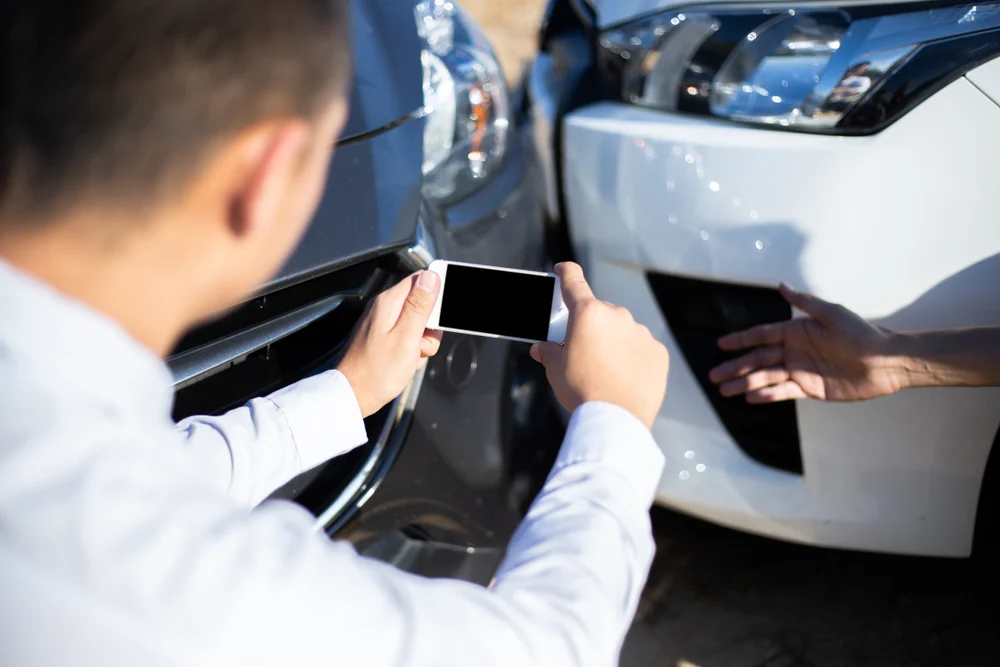
- Photos of vehicle damage, skid marks, and the surrounding scene
- Names and phone numbers of anyone who witnessed the crash
A phone camera preserves details a memory cannot. Nearby businesses may also have surveillance footage of the fleeing vehicle, and we typically ask clients to request that footage within days of the crash, before it gets overwritten.
Seek medical attention even if injuries seem minor. Adrenaline can mask pain, and a documented medical visit on the day of the crash strengthens a claim that might otherwise be challenged by an insurer.
How to Report a Hit-and-Run to Police and Your Insurer in Texas
Reporting the crash is not optional. Texas law requires drivers involved in an accident causing injury, death, or significant property damage to notify police, and a hit-and-run victim should call law enforcement directly from the scene whenever possible.
The responding officer will file a report even without an identified driver, and that report becomes one of the most important pieces of evidence in the entire claim. It documents the time, location, and circumstances of the crash from an independent source, giving the injured driver an account an insurer cannot easily dispute.
Once safely home, drivers should also call their own insurance company to report the accident and get the name and phone number of the adjuster assigned to the claim.
Contacting an insurer early does not mean accepting a quick settlement. It means starting the claims process with an accurate account of what happened while the details are still fresh. Insurance companies often have their own people working a claim from the very first day, and an accurate early record is one of the best ways to keep that from working against the injured driver.
Why Uninsured Motorist Coverage Matters When the Driver Flees
An unidentified driver cannot be sued directly, at least not until an investigation turns up a name. Uninsured motorist coverage was built to cover exactly that situation.
Texas law requires this coverage to be included automatically in most auto policies. An insurer only leaves it out if the policyholder rejected it in writing, under Texas Insurance Code Section 1952.101. That coverage applies when the at-fault driver has no insurance or cannot be found at all, and a hit-and-run driver, by definition, fits that second category the moment they leave the scene.
This coverage can pay for medical bills, lost income, and other losses tied to the crash, standing in for the driver who fled much as it would if that driver had stayed and carried insurance. The coverage does the work the missing driver could not.
Checking the summary page of the policy, often called the declarations page, after any hit-and-run confirms it is there rather than leaving that detail to assumption, and our attorneys can help interpret it when the terms are not clear.
Get Your Free Case Review
No Upfront Fees
(888) 576-4669
Texas Hit-and-Run Laws and Penalties for Fleeing Drivers
Texas law does not treat leaving the scene of a crash as a minor lapse in judgment. It is a criminal offense.
Texas Transportation Code Section 550.021 requires a driver involved in a collision that results in injury or death to stop at the scene, determine whether anyone is hurt, and remain there until the driver has met the state’s information-exchange requirements. A driver who fails to do so can face serious consequences. A collision resulting in death is a second-degree felony, and one resulting in serious bodily injury is a third-degree felony. Other injury crashes can still lead to imprisonment, a fine of up to five thousand dollars, or both.
These penalties exist separately from any civil claim an injured person may bring. A criminal conviction does not automatically pay medical bills or lost wages. But the same evidence that supports a criminal case, such as surveillance footage, witness statements, and vehicle debris, often strengthens a civil recovery as well. When law enforcement identifies the driver, the victim can pursue compensation directly from that driver’s own insurance, a development our attorneys watch for closely since it often opens the door to a stronger civil claim.
How You May Still Recover Compensation if the Driver Isn’t Found
Many hit-and-run cases are never solved, which is often the first concern an injured driver raises. But identifying the fleeing driver is not always necessary to recover compensation.
Collision coverage, a standard part of most auto policies, typically pays for vehicle repairs after a hit-and-run regardless of fault. Uninsured motorist coverage reaches further, often covering a rental car and pain and suffering as well, usually at a lower deductible than a standard collision claim requires. Health insurance, personal injury protection, and medical payments coverage (med-pay) can also help cover immediate medical costs while a claim develops. If witnesses, surveillance footage, or physical evidence later identify the driver, a direct claim against that person’s own insurance becomes possible as well, and our attorneys review every available source of coverage to make sure nothing gets left off the table.
Fault still matters even when only one driver is known. Texas follows a proportionate responsibility system that can reduce an injured driver’s compensation based on their own share of fault. Under Texas Civil Practice and Remedies Code Section 33.001, a driver whose share of responsibility is greater than 50 percent cannot recover damages at all. Insurers sometimes argue an injured driver contributed to the crash even when the other driver fled. The evidence should decide that argument, not the insurer.
Get Trusted Legal Guidance
No Upfront Fees
(888) 576-4669
Common Mistakes That Can Hurt a Hit-and-Run Claim
The scene of the crash is only the first part of what to do after a hit-and-run. Decisions made in the days that follow can weaken a claim just as much as anything that happens in the first few minutes, and we see well-founded claims lose value over mistakes like these more often than most people expect.
- Posting about the crash on social media: Insurance adjusters routinely review public posts, and a casual comment about feeling fine can be used later to question the severity of an injury.
- Giving a recorded statement before understanding the full extent of injuries: Adjusters ask specific questions designed to limit payouts, and early answers, once given, are hard to take back later.
- Waiting too long to seek medical care or report the crash to police: Small delays of even a few days can raise questions about whether the injuries are connected to the collision at all.
Small decisions in the days after a crash can shape the entire claim.
Hit by a Fleeing Driver in Texas? Reed & Terry Is Here to Help
The police report is often only the beginning of a hit-and-run claim. Reed & Terry Law Firm has helped injured drivers across Texas pursue every available source of compensation, from uninsured motorist coverage to claims against drivers later identified through evidence, and we work to level the playing field against insurance companies that already have their own people on the case. If you are still asking what to do after a hit-and-run in your own case, our attorneys can review the details and explain your options at no cost. Call (281) 491-5000 today for a free consultation.
When you’ve been injured because of someone else’s negligence, you deserve experienced legal guidance from attorneys who understand what’s at stake. The attorneys at Reed & Terry Law Firm have spent decades helping injury victims across Sugar Land, Fort Bend County, and throughout Texas pursue the compensation they deserve. Through personalized representation, thorough case preparation, and dedicated advocacy, our team works to protect your rights while helping you move forward with confidence. Learn more about our attorneys or schedule your free consultation today.