Bus accidents are unlike other vehicle crashes, and the aftermath rarely unfolds as victims expect. The injuries tend to be severe, the list of potentially liable parties is longer than most people anticipate, and the legal deadlines that control your right to recover can expire long before a case feels ready to file. Along the Katy Freeway, the Grand Parkway, and the broader Harris County corridor, crashes involving transit buses, school vehicles, charter coaches, and commercial shuttles are more common than the headlines suggest. Each type of operator brings its own set of legal rules, insurance structures, and, in the case of government-run routes, immunity protections that require specific procedural steps to overcome.
If you or a family member was hurt in one of these crashes, working with an experienced Katy bus accident lawyer at Reed & Terry Law Firm from the start is not just helpful; it can determine whether your claim survives at all.
Most people who have just been injured in a bus crash are focused on one thing: recovery. Medical appointments, missed work, and mounting bills quickly consume every available hour. What many victims do not realize is that the clock on their legal claim starts running from the day of the accident, and in some cases, far sooner than the standard deadline.
Under Texas Civil Practice and Remedies Code § 16.003, personal injury claims in Texas must generally be filed within two years of the date of injury. That deadline alone creates urgency. But when a government entity operates a bus, a city transit system, a public school district, or a county agency, the Texas Tort Claims Act, Civil Practice and Remedies Code § 101.101, imposes a separate, much shorter notice requirement. A claimant must provide formal written notice to the government unit within six months of the incident. Missing that window can permanently bar a valid claim, regardless of how serious the injuries are.
Bus companies and their insurers move quickly after a crash. Adjusters are often dispatched to the scene or to the hospital within hours. Their goal is to gather information that limits the company’s exposure, not to help you recover what you are owed. When you have an attorney working on your behalf from the start, that dynamic shifts. The attorneys at Reed & Terry Law Firm can preserve critical evidence, including surveillance footage, driver logs, maintenance records, and black box data, before it is overwritten or discarded. We can communicate with insurers on your behalf so that nothing you say is used against you. And we can evaluate the full picture of your damages, including losses that may not become apparent until weeks or months after the accident.
Insurance companies that represent large bus operators and transit authorities are not neutral parties. They employ staff adjusters and outside counsel whose job is to find reasons to dispute your injuries, question your treatment choices, and characterize the accident in a way that shifts responsibility onto you. In Texas, where modified comparative fault under § 33.001 allows a defendant to reduce a payout by assigning a portion of fault to the victim, every contested fact matters. Having an attorney who understands that strategy is not optional, it is the foundation of a credible claim.
Early legal representation is about protecting a claim that took real harm to create. Bus accident cases involve multiple parties, overlapping insurance policies, and government immunity rules that require specific legal knowledge to navigate. The earlier our attorneys are involved, the stronger that foundation becomes.
Request a 100% Free Case Review
Our Katy bus accident lawyers offer initial consultations totally free of charge. We can discuss your case in person at one of our law offices in Sugar Land, Katy or Richmond, or we can conduct your free consultation over Zoom. Se habla Español.
Our personal injury law firm regularly represents clients from throughout the Houston area, Austin and beyond.
To request your free case review, fill out our online form or give us a call at (281) 491-5000.

Buses are heavy, rigid vehicles with limited restraint systems for passengers. When a collision occurs, the physics work against everyone on board. Passengers seated without seatbelts, which is common on transit and charter buses, are thrown forward, sideways, or ejected entirely in severe crashes. Even a relatively low-speed rear-end impact can produce injuries that take weeks or months to fully manifest.
Traumatic brain injuries are among the most serious outcomes of bus accidents. According to the Mayo Clinic, traumatic brain injury occurs when a sudden trauma damages the brain, disrupting normal function in ways that range from temporary confusion to permanent cognitive impairment. In a bus crash, the abrupt deceleration or direct impact to the head can cause these injuries even when no visible wound is present. Victims sometimes leave the scene feeling shaken but functional, only to develop severe headaches, memory problems, and personality changes in the days that follow.
Spinal cord injuries are another frequent consequence. The neck and lower back absorb tremendous force in a collision, and damage to the vertebrae or spinal cord can result in chronic pain, limited mobility, or paralysis. Cervical injuries sustained in a bus crash are particularly common in rear-end impacts, where the sudden jolt hyperextends the neck with force that soft tissue cannot absorb. These injuries often require surgery, long-term rehabilitation, and ongoing medical management, expenses that must be fully accounted for in any compensation claim.
Beyond brain and spinal injuries, bus crash victims frequently present with a range of additional trauma that must be fully documented and valued as part of any claim:
The full value of a bus accident claim is not limited to emergency room bills. It includes ongoing medical care, future treatment costs, lost wages, reduced earning capacity, and pain and suffering. Accurately calculating those damages requires more than adding up medical invoices. Future costs must be projected, wage losses documented through employment records and expert testimony, and non-economic damages assigned a value that reflects their real weight. That work requires medical documentation, expert analysis, and legal experience, all of which the team at Reed & Terry Law Firm brings to every case we handle.
One of the most important questions a Katy bus accident lawyer must answer is who bears legal responsibility. The answer is rarely simple, and in many cases, more than one party carries liability.
| Potentially Liable Party | Examples |
|---|---|
| Bus Driver | Speeding, distracted driving, failure to yield |
| Bus Company | Poor maintenance, inadequate driver training |
| Government Entity | METRO or school district buses |
| Third-Party Driver | Negligent motorists contributing to the crash |
| Manufacturer | Defective brakes, steering, or tires |
Note: More than one party may share liability in a Texas bus accident case, depending on how the crash occurred and the available evidence.
The following are the most common liable parties our attorneys identify and pursue in bus accident claims:
In cases involving gross negligence, a conscious disregard for the safety of others, Texas Civil Practice and Remedies Code § 41.001 permits a jury to award exemplary damages beyond actual compensation. When a bus company knowingly puts a vehicle with failed brakes on the road or allows an impaired driver to operate a route, that standard may be met.
Identifying every liable party is not a formality; it is the difference between a partial recovery and a full one. A claim filed only against the driver may return a fraction of what a properly structured case against the driver, the operator, and a third-party vehicle manufacturer could achieve. Each liable party typically carries its own insurance policy, which represents a potential source of compensation. The attorneys at Reed & Terry Law Firm conduct a systematic liability analysis on every bus accident case we take, specifically to ensure that no responsible party and no available coverage is left off the table.
Bus accident injuries can result in substantial medical expenses, lost wages, and lasting physical and emotional challenges. Reed & Terry Law Firm has recovered significant compensation for injury victims across Texas through strategic negotiation and courtroom advocacy. Some of our notable case results include:
$1,300,000
Bus roll-over accident causes death of a passenger
$600,000
Driver injured when 18-wheeler operator makes u-turn on highway
$265,000
Driver suffers back injury after being struck by commercial vehicle
$225,000
Passenger injured after being struck by emergency vehicle
Bus accident cases demand a level of legal work that goes well beyond filing paperwork. They involve commercial insurance policies with high coverage limits, corporate defendants with in-house legal teams, and, when government entities are involved, procedural requirements that allow no room for error. Our attorneys have handled these cases for more than 30 years and understand exactly what it takes to build a claim that holds up.
We begin with a thorough investigation: obtaining the accident report, requesting maintenance and inspection records, subpoenaing driver logs, and preserving any available surveillance or dashcam footage. Bus routes along I-10 and FM 1463 in the Katy corridor are monitored by traffic cameras and commercial systems, and that evidence disappears quickly without a legal hold request. When the evidence supports it, we issue spoliation letters requiring the responsible parties to preserve all relevant data.
Our attorneys work with accident reconstruction specialists, medical experts, and economic analysts to build a complete picture of what happened and what it cost you. Medical experts help document the full scope of your injuries and their long-term implications. Economic analysts calculate lost earning capacity and project future treatment expenses. These are not extras, they are the foundation of a damages argument that insurance companies and defense counsel are forced to take seriously.
We have obtained significant results in bus accident cases. In one representative matter, our firm recovered $1,300,000 for the family of a passenger killed in a bus rollover accident. Every case is different, and past results do not guarantee future outcomes, but that result reflects the commitment and depth of preparation we bring to serious bus accident claims.
The attorneys handling your case bring credentials that matter in complex bus accident litigation. Here is what they bring to the table:
Together, our attorneys bring over 60 years of combined personal injury experience to every case we take on.
When the responsible party refuses to offer fair compensation, our attorneys are prepared to take the case to trial. That willingness changes the calculus for defendants who count on a low settlement. Many bus accident victims recover less than they deserve because their attorneys are not prepared to litigate. We are.
We also offer our clients practical support during the process. After a serious accident, medical bills arrive before settlement checks do. Our firm can help connect clients with medical providers and, in appropriate cases, assist with the financial pressures that arise while a claim is pending.
The decisions made in the hours and days after a bus accident have a direct impact on the strength of the resulting legal claim. Each step below is an action that protects your legal rights, not just your health:
At Reed & Terry Law Firm, our personal injury attorneys have over 60 years of combined experience providing high-quality representation to clients throughout Texas. Our firm is proudly affiliated with prestigious organizations, including:
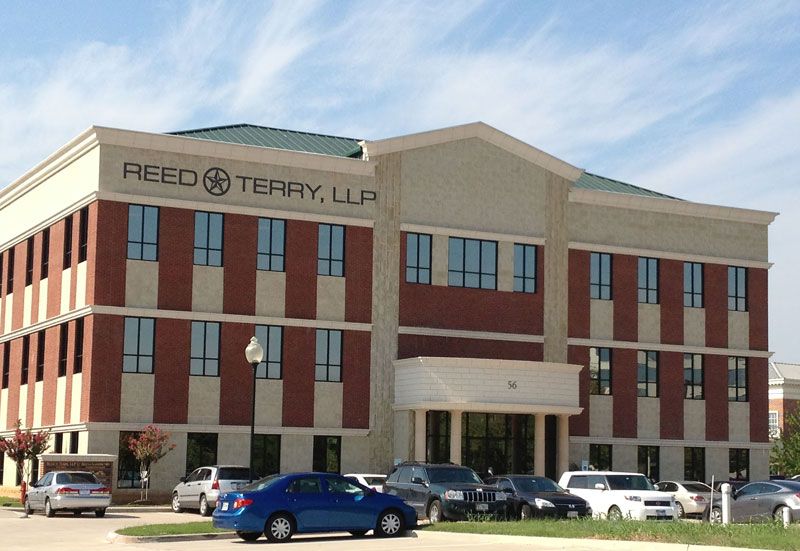
Bus companies and government transit agencies have legal teams in place to defend their interests from the moment a crash occurs. You deserve the same level of preparation on your side. Reed & Terry Law Firm has served Katy and the surrounding communities for more than 30 years, recovering millions of dollars for injured Texans.
If you or someone you love needs a Katy bus accident lawyer, do not wait. Call us today at (281) 491-5000 for a free consultation. There are no fees unless we recover for you.
When you’ve been injured because of someone else’s negligence, you deserve experienced legal guidance from attorneys who understand what’s at stake. The attorneys at Reed & Terry Law Firm have spent decades helping injury victims across Sugar Land, Fort Bend County, and throughout Texas pursue the compensation they deserve. Through personalized representation, thorough case preparation, and dedicated advocacy, our team works to protect your rights while helping you move forward with confidence. Learn more about our attorneys or schedule your free consultation today.