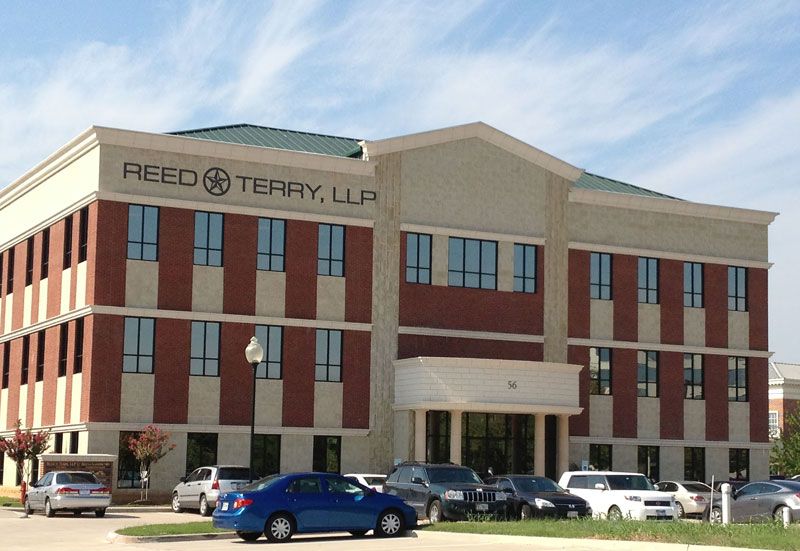
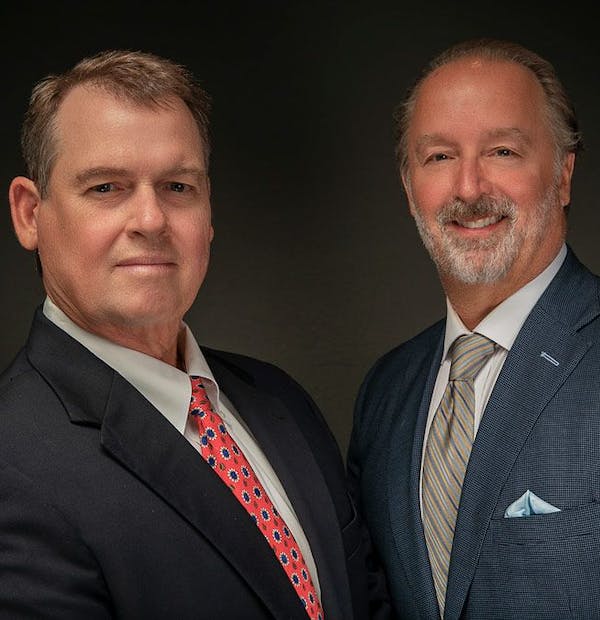
Rideshare accidents in Sugar Land create legal problems that most injured people are not prepared for. The moment a collision happens inside an Uber vehicle, or because of one, you are no longer dealing with a standard two-car insurance claim. You are dealing with a platform company, a contracted driver, and a layered insurance structure that is engineered to limit what you recover. If you or a family member was hurt in a crash involving an Uber vehicle anywhere in the cities of Houston, Sugar Land, Katy, Richmond, Rosenberg, Stafford, Missouri City, Needville, Fulshear or Fort Bend or Harris Counties understanding how that system works and acting quickly to preserve evidence is the difference between a fair recovery and a settlement that does not come close to covering your losses. Reed & Terry Law Firm has represented injured Texans for more than 30 years from offices in Sugar Land. Our co-founders, Jackson R. Reed and Travis B. Terry, have each dedicated their careers to personal injury law since 1993 and 1994, respectively. Travis B. Terry is board-certified in personal injury trial law, and both attorneys are members of the Texas Trial Lawyers Association.
An Uber accident lawyer in Sugar Land does more than file paperwork. They know which insurance period governed the crash, how to pull the driver’s app data, and how to hold every responsible party to account. The sections below walk you through every part of that process so you can make informed decisions from day one.
One of the first questions any Uber accident attorney in Sugar Land will ask is: What was the driver doing in the app when the crash happened? That question matters because Uber does not insure all of its drivers the same way at all times. Texas Occupations Code Chapter 2402, which governs transportation network companies operating in this state, imposes specific insurance requirements on companies like Uber that vary depending on a driver’s active status on the platform’s digital network. The coverage that applies to your crash shifts depending on whether the driver was idle, en route, or carrying a passenger, and those shifts are significant in dollar terms.
Before you speak with any insurance adjuster, and before you accept any offer, you need to know which tier of coverage applied the moment your crash occurred. Misidentifying the active period is one of the most common ways injured victims in Fort Bend County leave money unclaimed before they have even spoken with a lawyer.
Uber structures its insurance obligations around three distinct coverage periods. According to Uber’s Driver Insurance Overview, the breakdown works as follows.
Determining which period was active when your crash occurred requires access to Uber’s internal trip records and driver data. The attorneys at Reed & Terry Law Firm know how to obtain that information and how to use it to establish which policy applies and what your maximum recovery looks like before any negotiation begins.
Our uber accident lawyers offer initial consultations totally free of charge. We can discuss your case in person at one of our law offices in Sugar Land, Katy or Richmond, or we can conduct your free consultation over Zoom. Se habla Español.
Our personal injury law firm regularly represents clients from throughout the Houston area, Austin and beyond.
To request your free case review, fill out our online form or give us a call at (281) 491-5000.
Sugar Land is one of the fastest-growing cities in Fort Bend County, and its road network reflects that growth in ways that create ongoing risks for rideshare passengers, motorists, cyclists, and pedestrians. Dense commercial corridors, heavy commuter traffic on US-59 and Highway 6, and the constant stop-and-go patterns generated by rideshare pickups and drop-offs in neighborhoods like First Colony, Sienna, Riverstone, and New Territory all contribute to collision conditions that recur regularly. According to TxDOT’s 2024 crash records by county, Fort Bend County recorded a notable number of fatal crashes across its road network last year, reflecting the volume and severity of traffic incidents throughout the greater Sugar Land area.
The Uber crashes our attorneys handle most frequently in this area follow recognizable patterns:
Each of these crash types has its own evidentiary demands and insurance structure. The physical pattern of the crash is often the first indicator of which driver action or platform behavior contributed most directly to the impact, and it shapes the entire investigation strategy from day one.
Two of Sugar Land’s most heavily traveled corridors, Highway 6 and US-59, are consistent locations for serious rideshare crashes. US-59, also known as the Southwest Freeway, carries high-speed interstate traffic through Fort Bend County, and the merging patterns, compressed exit ramps, and lane shifts that freeway travel demands create dangerous conditions for Uber vehicles navigating toward pickup zones near the corridor’s several Sugar Land exits.
Highway 6 is a different environment. It is a major surface-level arterial lined with restaurants, shopping centers, office parks, and apartment complexes from the Missouri City boundary through the Sugar Land town center, all generating dense rideshare demand around the clock. Drivers stopping along Highway 6 to pick up or drop off passengers routinely slow or stop in active travel lanes, placing passengers and surrounding motorists at real and foreseeable risk. The convergence of Highway 6 and US-59 is particularly dangerous as a high-volume intersection, where rideshare app activity, driver distraction, and heavy traffic combine to cause preventable crashes. Additional corridors our attorneys see regularly include FM 1092 near the First Colony area and Sweetwater Boulevard through Riverstone.
If your crash occurred on any of these corridors, physical and digital evidence capable of establishing fault exists at the scene and in Uber’s records. Skid marks, traffic signal timing data, business surveillance footage, and the platform trip log all carry a limited window before they disappear. Contacting Reed & Terry Law Firm early gives our team the best opportunity to preserve everything before that window closes.
Attempting to settle your claim on your own can be overwhelming. As your personal injury firm, Reed & Terry Law Firm can protect your interests and help you fight against insurance companies trying to take advantage of your situation. We provide free consultations to evaluate your case.
Establishing fault in a Sugar Land Uber crash involves the same foundational elements as any Texas negligence case, but the rideshare context adds layers that do not exist in a standard collision. You may be dealing with Uber’s insurance carrier, the driver’s personal insurer, a third-party driver’s insurer, or some combination of all three, each with its own adjusters and financial incentives to reduce what it pays. Those carriers do not coordinate in your favor. They coordinate only to the extent that it serves their shared interest in minimizing total payout. Reaching a full and fair recovery requires methodically building a case against each responsible party while anticipating the arguments each insurer will use to limit your share.
Texas Civil Practice and Remedies Code § 33.001 governs comparative fault in personal injury cases throughout Texas. Under this modified comparative fault framework, you may recover damages as long as your share of responsibility does not exceed 50%. If you are assigned 20% of the fault, your recovery is reduced by 20%. If you are assigned 51% or more, you recover nothing. Insurance adjusters in rideshare cases routinely attempt to push fault onto injured victims because even a modest assignment dramatically reduces their exposure. Countering that strategy effectively requires documented evidence, legal preparation, and an attorney who has handled these specific arguments before. Cases in Sugar Land that proceed to litigation are typically filed in the Fort Bend County District Courts, which adds a local procedural dimension that attorneys who regularly practice in this jurisdiction understand well.
The driver’s app status at the precise moment of the crash is the single most consequential piece of evidence in any Uber or Lyft injury case. It establishes which coverage period is active, which policy applies, and the maximum available limits. It also establishes whether the driver was operating within the scope of Uber’s platform, a fact directly relevant to Uber’s own liability exposure.
App status data held by Uber or Lyft includes:
This data determines whether the $1,000,000 commercial policy is available or whether only the lower Period 1 limits apply. It can also identify whether the driver was multitasking with simultaneous requests, a prohibited practice that directly implicates distracted driving. Uber will not release this data voluntarily. Obtaining it requires a formal legal demand or discovery in litigation. The team at Reed & Terry Law Firm has handled that process repeatedly in rideshare cases across Fort Bend County, and our attorneys use the resulting data to lock in the applicable policy and establish the full scope of Uber’s exposure before any settlement discussion begins.
The injuries produced by Uber crashes in Sugar Land range from soft tissue strains to conditions that permanently alter a person’s ability to work, move, and function day to day. Whiplash, cervical disc injuries, and lumbar sprains are common outcomes in rear-end collisions at lower speeds. Higher-speed impacts on US-59 or Highway 6 produce more serious results, including traumatic brain injuries, spinal cord damage, fractured ribs and extremities, internal organ bleeding, and lacerations requiring surgical repair. The severity of your injuries and the completeness of your medical documentation will shape both your physical recovery and the total value of your legal claim in ways that are very difficult to correct later.
Seek medical attention immediately after any Uber crash in Sugar Land, even when your symptoms feel manageable at the scene. Memorial Hermann Sugar Land and other Fort Bend County medical facilities have the diagnostic capacity to identify injuries that do not produce obvious pain in the immediate aftermath of a crash. Traumatic brain injuries and internal injuries, in particular, may not present clear symptoms for hours following impact. A gap between the crash and your first medical visit gives insurance carriers a documented basis to argue that your injuries were pre-existing or unrelated to the accident.
Follow through completely with every course of care your doctors recommend. Gaps in treatment are among the most reliable tools insurance adjusters use to undervalue claims. Imaging, physical therapy, specialist referrals, and follow-up visits each contribute to the medical record that connects your injuries to the crash and documents the trajectory of your recovery.
Take these additional steps to protect your claim throughout the treatment process:
In cases involving long-term disability or permanent impairment, accurately calculating future medical needs requires input from treating specialists, life care planners, and vocational rehabilitation experts. Reed & Terry Law Firm works with qualified professionals in each of those disciplines to ensure that any settlement or verdict accounts for not only what you have already spent, but everything your care will require going forward. Settling before that picture is complete is one of the most damaging mistakes Uber accident victims make in Texas.
Texas law provides injured victims of negligence with several distinct categories of financial recovery. The full value of your claim depends on the severity of your injuries, the circumstances of the crash, how fault is allocated across all responsible parties, and whether any party acted with gross negligence. In Uber accident cases, that valuation process is more complicated than in a standard two-car collision because multiple defendants, multiple insurance policies, and overlapping coverage tiers all factor into the final number.
Understanding each category before engaging with any insurance carrier is essential. It gives you a concrete framework for measuring what you are actually owed before any offer is placed in front of you, and it puts you in a far stronger negotiating position from the start.
Economic damages cover your documented financial losses. These include:
Non-economic damages address losses that carry no invoice. Pain and suffering, mental anguish, loss of enjoyment of life, and physical disfigurement are all recoverable under Texas law. Texas does not cap non-economic damages in personal injury cases against private parties, meaning there is no arbitrary limit on what you can recover for the full human cost of what the crash has taken from you.
Exemplary damages are available when the responsible party’s conduct rises to the level of gross negligence or intentional wrongdoing. Texas Civil Practice and Remedies Code § 41.001 governs the framework for exemplary damage awards in Texas civil cases. In Uber crash cases, these damages can apply when a driver was intoxicated, when Uber knowingly retained a driver with a history of unsafe behavior, or when the company demonstrated deliberate indifference to the safety of people using its platform.
The total value of your claim also depends on how fault is distributed across all responsible parties. In a multi-vehicle Uber crash, the at-fault third-party driver, the Uber driver, and, potentially, Uber itself may each bear a portion of the responsibility. The modified comparative fault rule under Texas Civil Practice and Remedies Code § 33.001 makes each defendant’s liability proportional to their fault percentage. Our attorneys have recovered settlements for vehicle collision clients across Fort Bend County ranging from $100,000 to $862,000, and those results reflect the thorough, evidence-driven case building that Reed & Terry Law Firm has delivered for injured Texans since 1994.
Uber’s insurers are not on your side. Adjusters are trained to contact you early, present offers that feel significant when you are managing bills and missed income, and close claims before the full scope of your injuries is known. Once you sign a release, your claim ends permanently, regardless of your medical needs. Talking with an attorney before any communication with any insurance carrier is one of the most important protections available to you after an Uber crash in Sugar Land.
An Uber accident can leave you facing mounting medical bills, lost income, and uncertainty about your recovery. At Reed & Terry Law Firm, our attorneys fight to recover the full compensation our clients deserve so they can focus on healing and moving forward. Some of our results on behalf of injured accident victims include:
$862,000
Driver injured in collision at intersection
$600,000
Driver injured when 18-wheeler operator makes u-turn on highway
$1,300,000
Bus roll-over accident causes death of a passenger
$250,000
Driver suffers eye injury in rear-end collision
After a rideshare crash, the decisions you make in the first days carry lasting consequences for your recovery and your legal rights. Reed & Terry Law Firm represents injured victims throughout Sugar Land and Fort Bend County, and our attorneys are ready to review your case as your Uber or Lyft accident lawyer in Sugar Land at no charge and help you pursue fair compensation for your injuries.
Call (281) 491-5000 today to schedule your free consultation. You pay nothing unless we recover for you.

By hiring a car accident lawyer at the Reed & Terry Law Firm, you can potentially increase your settlement. Our experienced attorneys know how to navigate legal complexities, negotiate with insurance companies, and ensure you receive fair compensation for your injuries and damages.
Navigating the intricacies of negotiating with insurance companies following a car accident is a critical step in ensuring fair compensation and protecting your rights. It is essential to have a solid grasp of policy terms, effectively present evidence to support your claim and advocate for what you deserve. Seeking guidance from experienced legal professionals, such as those at the Reed & Terry Law Firm, can provide invaluable support and expertise throughout this process.
Insurance negotiations can often be overwhelming and confusing, especially when dealing with complex legal jargon and procedures. Having a knowledgeable legal team on your side can help you navigate these challenges with confidence. By understanding the nuances of your insurance policy and knowing how to leverage evidence in your favor, you can increase the likelihood of securing a favorable outcome in your case.
At the Reed & Terry Law Firm, our dedicated car accident attorneys have extensive experience in handling insurance negotiations and are committed to fighting for the best possible outcome for our clients. We work diligently and efficiently to ensure that your rights are protected and that you receive the compensation you rightfully deserve. Don’t face insurance companies alone – let us guide you through the process and advocate for your best interests every step of the way.
The aftermath of car accidents can leave lasting emotional and psychological scars. Coping with trauma, anxiety, and PTSD are common challenges for accident survivors. Seeking professional help is important when dealing with the emotional aftermath of an accident. Trauma from car accidents can have lasting effects; therapy, support groups, and counseling can aid in coping and healing. Understanding these resources is vital for recovery. Connecting with local support groups, legal aid services, and counseling agencies to assist in your recovery journey. Seeking guidance on navigating insurance claims and understanding your rights post-accident. Access resources for emotional well-being and legal assistance tailored to accident victims’ needs.
At Reed & Terry Law Firm, our personal injury attorneys have over 60 years of combined experience providing high-quality representation to clients throughout Texas. Our firm is proudly affiliated with prestigious organizations, including: